

堀田都茂樹
バベルの50年を振り返って、次の50年はこうしたい!!
来年、バベルは創立52年目を迎えます。
半世紀を超える歩みを振り返ると、私たちの「翻訳」をめぐる歴史は、大きく四つの段階として読み取ることができます。
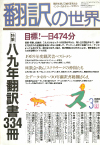
第一期は、『月刊翻訳の世界』の刊行に始まり、「翻訳文法」の開発、日、米、中、韓での「翻訳奨励賞」、「国際翻訳大賞」の実施、翻訳教育事業、そして米国連邦政府認証の翻訳専門職大学院の創設へと続く時代でした。翻訳を「語の変換」として捉え、その技術と理論を体系化することに力を注いだ、いわば土台構築の時代です。
第二期では、翻訳を単なる言語変換ではなく、「コミュニケーション」として捉え直しました。日本のトップ企業における海外赴任前研修、リーガルコミュニケーション協会の設立を通じた企業の国際化支援。さらに日本ディベート協議会と連携し、米国のディベートチャンピオンを日本に招き、全国各地で日英ディベート大会を開催しました。
また、リンガフランカの時代、世界に通じる英語(Plain English)を独自に開発、のちに、日本を開く日本語(Plain Japanese)へと発展、その両方を学ぶ独自の言語戦略を展開。米国資格、CAP(Certified Administrative Professional-当初はCertified Administrative Secretary)の日本での独占販売権を取得、普及させたのもこの時期でした。
この時期は、企業と個人の双方において、「グローバルに考え、発信する力」を育てることを目指した時代でした。
第三期では、「智の共有」を理念に掲げ、世界中の未訳の名著を日本に届ける「地求図書館」を事業化しました。翻訳を通じて智を社会に循環させるという思想を、具体的な事業として形にした時代だったと言えるでしょう。もっとも、「智の共有」は翻訳という行為に限られるものではありません。人は、自らの言葉で世界に向けて発信することによっても、智の共有に貢献することができます。
こうした認識を踏まえ、第四期として私たちが見据えるのは、翻訳と創作の中間領域です。その中核に位置づけたいのが、「新たな翻訳の進化形としての『古典核新訳』」です。
これまでの翻訳が、主として「現在の智」を共有する横軸の営みであったとすれば、創訳は、人類が積み重ねてきた過去の知的資産、古典を、解釈し、創造的に編集、再生する営みです。それは、過去の資産を「いま」に蘇らせる、縦軸の智の共有だと言えるでしょう。
出版翻訳の分野においても、産業翻訳とは一線を画し、創造性と思想性を備えた新たな価値を生み出していきたいと考えています。就中、日本の作品を世界に紹介していく事業は「Books & Rights Marketplace」として世界に展開していきたいと考えています。
これからの半世紀、バベルは翻訳と創作の狭間に立ち、世界の智が行き交う未来を支え続けていきたいと考えています。
「翻訳は創造である。」
この原点に立ち返り、既成概念にとらわれることなく、
私たちはこれからも「翻訳」という営みの地平を、さらに拓き、深め、究めていきたいと考えています。
Editorial
Toward Babel’s 52nd Year: Expanding the Horizon of Translation
Next year, Babel will mark its 52nd year since its founding.
Looking back over more than half a century, our history of translation can be understood as unfolding through four distinct phases.
The first phase was dedicated to building foundations.
With the publication of The Monthly Journal of Translation, Implementation of the “Translation Encouragement Award” and “International Translation Grand Prize” in Japan, the U.S., China, and South Korea, the development of “translation grammar,” the launch of translation education programs, and the establishment of a U.S. federally accredited graduate school for professional translators, we systematized translation as the conversion of words from one language to another. It was a period focused on structure, methodology, and discipline.
In the second phase, we redefined translation as communication.
Through pre-departure training programs for Japanese executives assigned overseas, the founding of the Legal Communication Association, and collaborations with the Japan Debate Association, Babel supported both corporate globalization and individual international competence. By inviting U.S. debate champions to Japan and organizing nationwide bilingual debate tournaments, we sought to cultivate people who could think, argue, and engage across cultures.
Furthermore, during the Lingua Franca era, he independently developed Plain English—a globally accessible form of English—which later evolved into Plain Japanese, the language that opened Japan. He pursued a unique language strategy encompassing both.
It was also during this period that we acquired and promoted the exclusive distribution rights in Japan for the U.S. certification, CAP (Certified Administrative Professional—originally Certified Administrative Secretary).
The third phase emerged under the guiding principle of sharing knowledge.
We launched the “Global Knowledge Garden,” a project dedicated to translating important yet previously untranslated works from around the world into Japanese. Yet sharing knowledge is not limited to translation alone. It can also be achieved when individuals express ideas in their own voices and send them into the world. In the coming decades, Babel will continue to stand at the intersection of translation and creation, supporting new ways for global knowledge to circulate and resonate.
The fourth phase, which we are now entering, lies in the space between translation and authorship. At its core is Creative Translation —what we call “Transcreation with intellectual intent.” Here, we aim to redefine literary and publishing translation as a creative act distinct from industrial translation, generating new cultural and intellectual value.
While conventional translation has primarily focused on sharing contemporary knowledge along a horizontal axis, creative translation engages with humanity’s accumulated heritage—classical texts and timeless works—by editing, reinterpreting, and creatively reanimating them for the present. It represents a vertical axis of knowledge sharing: reviving the past so it can speak meaningfully to today’s world.
In particular, we aim to expand our initiative to introduce Japanese works to the world globally as the “Books & Rights Marketplace.”
Returning to our fundamental belief that translation itself is an act of creation,
Babel will continue to challenge established assumptions, expand the boundaries of translation, and explore its deeper possibilities.